
D³ DEVELOPMENT
BUILD THE SKILL. UNDERSTAND THE GAME. PERFORM WHEN IT MATTERS.
Great development isn’t about collecting drills or simply spending more time on the ice. It’s about building skills athletes can understand, adapt and apply when the game becomes faster, tighter and more demanding. D³ development connects technical skill, hockey IQ and decision-making to help players become more complete, confident competitors.
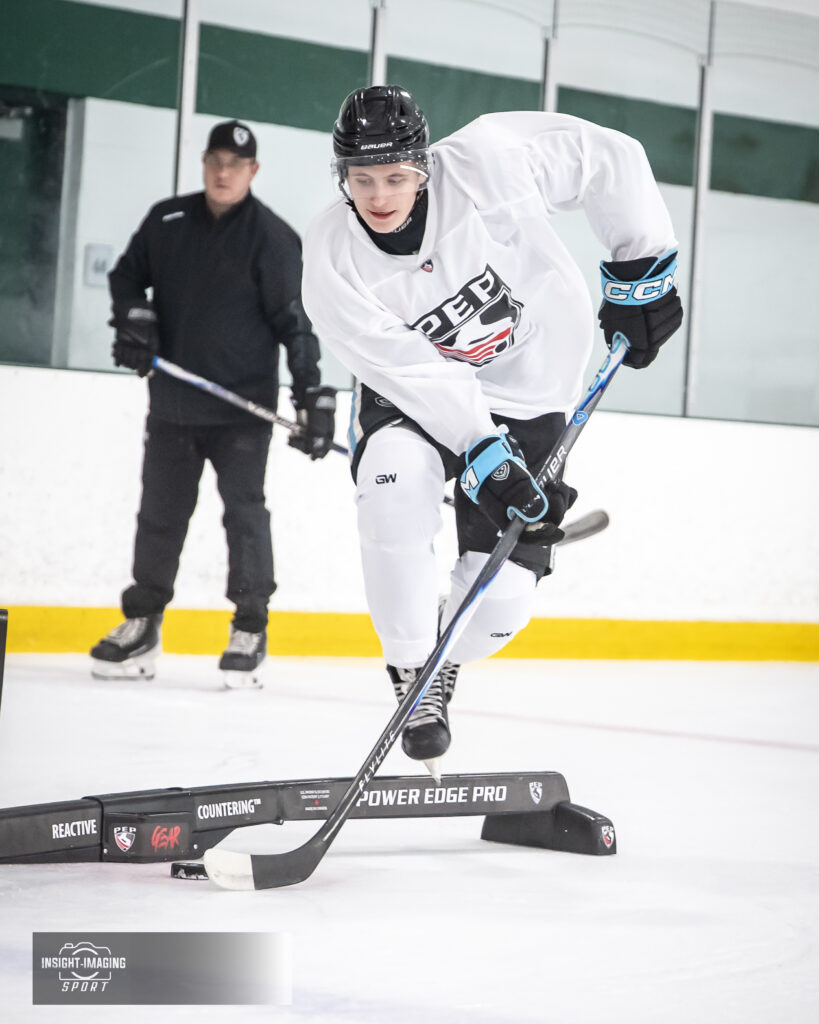
THE D³ DEVELOPMENT MODEL
SKILL IS THE START. TRANSFER IS THE GOAL.
A skill only becomes valuable when an athlete can recognize when to use it, adapt it to the situation and execute it under pressure. That’s why D³ development moves beyond isolated technique. We build the skill, introduce decisions and variability, and progressively challenge athletes to apply what they’ve learned in situations that reflect the demands of the game.
BUILD.
Develop the technical foundation. We focus on movement, puck control, shooting, passing and the individual skills athletes need to play with confidence and control.
READ.
Develop awareness and understanding. Athletes learn to recognize space, pressure, teammates and opponents so they can process what’s happening and make smarter decisions as the game unfolds.
APPLY.
Turn skill and awareness into performance. Athletes are challenged to execute under pressure, adapt to changing situations and use what they’ve learned at the speed and intensity of the game.
WHAT WE DEVELOP
BUILDING THE COMPLETE PLAYER.
Complete players aren’t built by developing one skill in isolation. Movement, puck control, shooting, passing, awareness and decision-making all have to work together. Our development approach connects these areas so athletes can build stronger technical foundations while learning how and when to use those skills in the game.
MOVEMENT & SKATING
Efficient movement creates more time and more options. We develop balance, edge control, acceleration, agility and body positioning so athletes can move with purpose, create separation and respond effectively as situations change.
PUCK CONTROL & POSSESSION
Puck skills need to hold up when space disappears and pressure increases. We develop control, protection, handling, deception and puck management so athletes can maintain possession, create options and make plays with confidence.
SHOOTING & SCORING
Scoring is more than shooting mechanics. We develop release, accuracy, shot selection, deception and the ability to create shooting opportunities so athletes can recognize and capitalize on scoring chances under pressure.
PASSING & PLAYMAKING
Effective playmaking combines execution with awareness. We develop passing technique, timing, deception and support habits so athletes can move the puck with purpose, create opportunities and connect with teammates as plays develop.
HOCKEY IQ & AWARENESS
Players need to see the game before they can influence it. We develop scanning, spatial awareness, anticipation and pattern recognition so athletes can better understand what’s happening around them and identify opportunities before they disappear.
DECISION-MAKING & APPLICATION
The game rarely gives athletes the same situation twice. We challenge players to read pressure, evaluate options, make decisions and execute their skills in changing environments—helping development transfer from practice into competition.
FROM TRAINING TO PERFORMANCE
TRAIN THE SKILL. CHALLENGE THE DECISION. CHANGE THE GAME.
Game performance depends on more than whether an athlete can execute a skill in a controlled environment. As players progress, we introduce pressure, variability, reads and choices that require them to adapt. The goal is to close the gap between what an athlete can do in training and what they can successfully execute when the game becomes unpredictable.
01
BUILD THE SKILL
Start with strong technical execution. Athletes learn the movement patterns, mechanics and habits needed to perform the skill with control, confidence and consistency.
02
CHALLENGE THE DECISION
Once the skill is established, we add reads, choices and pressure. Athletes must recognize what’s happening, evaluate their options and decide how to use the skill based on the situation in front of them.
03
APPLY IT TO THE GAME
Finally, athletes are challenged to execute in environments that reflect the speed, pressure and unpredictability of competition. The goal is for the skill to become something they can confidently access when the game demands it.
PLAYER DEVELOPMENT
DEVELOP THE PLAYER IN FRONT OF YOU.
Individual and small-group development allows us to focus more closely on the athlete—their strengths, habits, confidence and areas for growth. Training is built to challenge each player at the right level while connecting technical skill, hockey IQ and decision-making to situations they’ll face in the game.
TEAM DEVELOPMENT
DEVELOP THE PLAYER. CONNECT THE TEAM.
Team development connects individual skill to the way a group plays together. We work with coaches to build sessions around team needs, combining technical development, PEP training, hockey IQ and game concepts so players can apply their skills within the structure, pace and demands of their team.
WHY D³ DEVELOPMENT WORKS
PURPOSE BEHIND EVERY REP.
Development is most effective when athletes understand what they’re working on, why it matters and how it connects to the game. Every D³ session is built with intention—challenging players at the right level, adapting as they progress and creating opportunities to turn repetition into understanding and understanding into performance.
PURPOSEFUL
Every drill, progression and challenge has a reason. Training is designed around what we want the athlete to learn—not simply how many reps they can complete.
PROGRESSIVE
Development evolves as the athlete does. We build from strong foundations and progressively introduce greater speed, pressure, complexity and decision-making as players become ready for more.
ADAPTIVE
Athletes don’t all learn or progress the same way. Coaching, drills and challenges are adjusted to what we see—allowing us to respond to the player rather than forcing the player into a fixed plan.
GAME-RELEVANT
Skills need to work when the game gets fast, pressured and unpredictable. Training connects technique to real reads, decisions and situations so athletes can apply what they’ve developed when it matters.
READY FOR THE NEXT STEP?
BUILD YOUR DEVELOPMENT PLAN.
Every athlete and team has different needs, goals and challenges. Whether you’re looking for focused player development, training or a customized approach for your team, we’ll help you find the right next step.